
Life after Grief

Today is the sixteenth anniversary of my late husband’s death. Nine days before that my dad died. Any counsellors reading this will be sucking in their breath at my disclosure but I’m someone who believes in disclosure for the benefit of others in my work.
To get back to the grief, it’s a funny thing, isn’t it? I remember very vividly that at the beginning all I wanted was for someone to tell me how long it would last. How long would this constant pain be there? how long before I would stop hearing him in my life? – coming in through the door, getting up in the morning, going to bed at night, the motorbike coming up the hill, his great big belly laughs when something tickled him. I wanted answers and there were none to be given and I hated living in that thick sludgy soup of having to carry on every single day but not wanting too without him in it.
As time moved on, I was able to find joy in other parts of my life again and suddenly here we are sixteen years later (although obviously, it wasn’t quite that simple). Grief hasn’t left me, its just another part that makes up my whole, who I am. Through my experience and subsequently my counselling training I spent time in a local hospice, sharing in other people’s experiences and sitting with them on their journeys, and I learnt all about the different theories and models that are out there around grief. I learnt that we all bring something unique to our grief, we deal with it in our own ways and it means something different to each and every one of us.
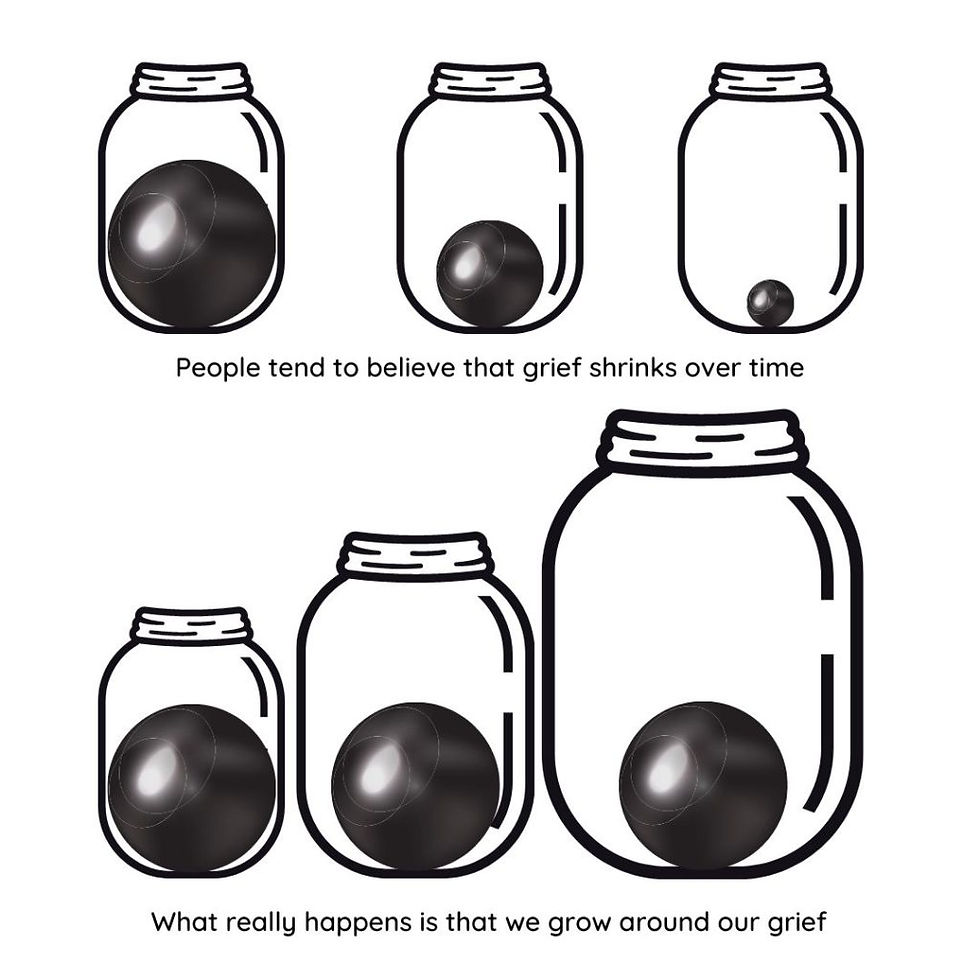
The main model that sits with me, personally, is Lois Tonkin’s Growing around Grief, where we see the grief in our life staying at the same point but our lives growing larger around it as we move forward.
I don’t believe I have lost my grief, it’s absolutely still there, but I have a rich, happy and joyful life now that I didn’t envisage at the beginning ever happening. It still catches me out at times when I catch a certain smell, hear a song, see someone move in a certain way or hit a certain date but it no longer consumes my every moment as it did once, and I can talk with others about it easily.
Death shouldn’t be hidden. I believe we should grow up knowing about death and talking about it as we do everything else in our lives. It’s not shameful, and we shouldn’t be worried about upsetting others when we talk to them about their loved ones. Generally, most people love the chance to talk about someone important in their lives who has died. I believe that we never truly lose that person whilst we continue to talk about them and tell others about them.
A common theme when counselling someone around grief is that they don’t feel they can confide in others their true feelings. There’s an expectation that after a certain amount of time we should be over it or at least keeping it to ourselves. We feel like we don’t want to burden others with it but in actuality, after the initial hurt and sadness, it can bring us such joy to remember who we’ve lost, to smile and laugh about something silly they said or did and simply remember that we loved them and they loved us back.
Children and young people in particular can find grief hard to navigate. They don’t necessarily have the words to express how they feel and again don’t want to make their loved ones sad when they talk about the person they’ve lost. Being quiet can easily be mistaken for someone being ok and being loud, angry and aggressive can quickly be shut down as just ‘naughty’ behaviour. Being creative, giving them time to talk or just be, reassuring them that it’s ok to feel all the emotions they are going through, telling stories and making memory boxes and for some, introducing to others who have been through similar experiences all help.
The initial grief is difficult but so is all the secondary losses we can feel after. The loss of someone who supported us, the loss of a financial contributor, the loss of a second parent, the loss of knowing they won’t be in other people’s lives anymore, certain milestones that happen without them, the loss of the relationships they introduced us to, of a second opinion when needed, the loss of who we are, being a sibling, parent, spouse, supporter and friend. Maybe the loss of certain beliefs and morals that might change without them in our life anymore. Of hopes and dreams for the future. The secondary losses are many and just like our main grief, how we feel them and manage them are completely unique to ourselves.

Grief is a tough road to travel with lots of bumps and potholes along the way but for most of us we generally learn and manage the corners and junctions it puts in front of us. Counselling is a bit like having a co-driver sitting alongside you, making sure you stay on the road and pointing out other routes along the way. Stopping to take a breath and a different view in from time to time, maybe a layby stop for a picnic before easing into the final destination when you’re ready.
Just remember, there’s no right or wrong way to ‘do’ grief. Talk, be kind to yourself, be gentle, no expectations, seek support from family, friends or professionals if you need it and if it’s feeling particularly hard and you are really struggling everyday pop along to your GP as you might just need a little more of a helping hand for a while. You can also call places such as the Samaritans on 116 123, NHS 111 or Childline on 0800 11 11 or simply google who can I talk to about my grief and many different options will come up.
There’s absolutely no shame at all in reaching out for help when we need it. Many of us are driving our own journeys and adventures but are more than happy to pull over for a bit and help someone else. Look after yourselves.

Comments